







By Dr. Michelle N. Ayers, MD, FAAFP (Austin Family Health Associates)
Medically Reviewed by Dr. James R. Hartman, MD (Infectious Disease Specialist)
Published: July 19, 2026
When patients sit across from me in the exam room, twisting a damp tissue between their fingers, they almost always ask the exact same question. They ask it in a whisper, eyes fixed firmly on the linoleum floor: “Dr. Ayers, is this normal? Or am I completely falling apart?”
The answer I give them is immediate, definitive, and usually brings a visible wave of relief: Pelvic health issues are incredibly common. You are not broken, you are not an anomaly, and you absolutely do not have to live in silent discomfort. Yet, because our culture treats anything below the belt as a profound secret, millions suffer alone before seeking help. Let’s change that right now.
The Quiet Crisis: A View From the Exam Table
I remember Sarah (whose name I’ve changed, of course). She was a 28-year-old schoolteacher who came into my office on a Tuesday afternoon, dragging her feet with exhaustion. For months, she had been experiencing a deep, dull ache in her lower abdomen. At first, she brushed it off as bad menstrual cramps. But then it started flaring up between periods. Sex became intensely painful, and she noticed a vague, unusual discharge. She spent late nights scrolling through terrifying online forums, convincing herself she had an uncurable malignancy. By the time she reached my clinic, her anxiety was as debilitating as her physical pain.
Sarah’s story isn’t rare. In fact, clinical data shows that nearly one-third of all women will experience chronic pelvic pain or an inflammatory pelvic condition at some point in their lives. The pelvis houses a complex, tightly packed ecosystem of muscles, nerves, reproductive organs, and the bladder. When one element flares up, the whole neighborhood feels it.
Clinical Discussion Header

What It Feels Like: Early Signs and Today’s Reality
Pelvic health issues do not look or feel the same for everyone. For some, it is a sharp, electric jab when they lift something heavy. For others, like Sarah, it is a heavy, concrete-like dragging sensation deep within the pelvis that worsens at the end of a long day of standing.
Early warning signs are frequently ignored because they mimic general fatigue or standard menstrual changes. Pay close attention if you notice:
- A persistent dull ache in the lower abdomen or lower back that lasts for weeks.
- Pain during or immediately after sexual intercourse (dyspareunia).
- An unexpected shift in your bowel or bladder habits, such as a sudden urgency to urinate or deep pain during bowel movements.
- Abnormal, foul-smelling, or uniquely colored vaginal discharge.
- Spotting between your menstrual cycles.
Unmasking the Culprit: How We Accurately Diagnose
We cannot treat what we do not precisely understand. When a patient presents with these symptoms, we treat it as an investigative process. One of the most critical structural and infectious conditions we rule out or confirm is Pelvic Inflammatory Disease (PID)—an infection of the reproductive organs that often stems from untreated bacterial pathogens traveling up from the cervix.
There is no single “pelvic pain test.” Instead, an accurate diagnosis relies on a structured, multi-step clinical assessment:
1. The Clinical Exam
I perform a gentle pelvic examination to check for localized tenderness, specifically looking for what we call “cervical motion tenderness.” If moving the cervix gently during an exam causes significant pain, it is a classic sign of pelvic inflammation or infection.
2. Lab Testing & Screenings
We immediately collect endocervical or vaginal swabs to run Nucleic Acid Amplification Tests (NAAT). These are highly sensitive, modern molecular tests used to identify specific organisms like Chlamydia trachomatis and Neisseria gonorrhoeae, as well as overgrowths of anaerobic bacteria associated with Bacterial Vaginosis (BV). We also check a clean-catch urine sample to rule out an acute Urinary Tract Infection (UTI).
3. Imaging and Advanced Diagnostics
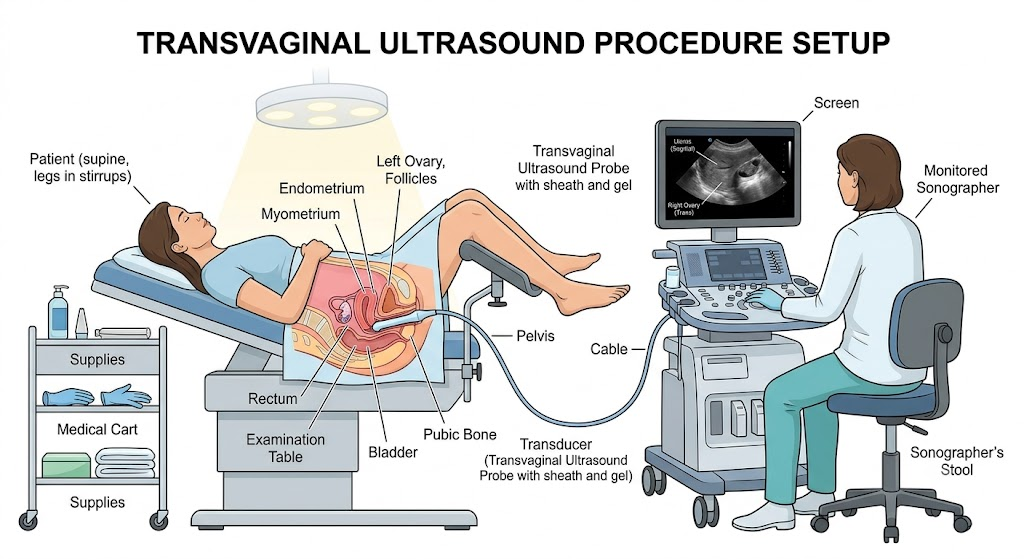
If the physical exam and labs leave questions, or if we suspect an abscess or deep endometriosis, a transvaginal ultrasound is ordered. This gives us a real-time, detailed view of the uterine lining, fallopian tubes, and ovaries. In rare, highly complex cases, we may utilize pelvic MRI or refer to a specialist for a laparoscopy.
Diagnostic Ultrasound Setup
The Medical Blueprint: Standard of Care Treatments
If the diagnostic path reveals an infectious etiology like Pelvic Inflammatory Disease, time is of the essence. We do not wait for days for cultures to return if the clinical suspicion is high; we initiate empiric antibiotic therapy immediately to protect fertility and prevent chronic scarring.
According to the Centers for Disease Control and Prevention (CDC) guidelines, standard first-line treatment for acute, mild-to-moderate PID involves a highly specific, robust combination of antibiotics designed to cover a broad spectrum of both aerobic and anaerobic bacteria:
| Medication Name | Standard Clinical Dosage | Route of Administration | Clinical Efficacy & Context |
| Ceftriaxone | 500 mg (single dose)* | Intramuscular (IM) Injection | Highly effective cephalosporin that eradicates Neisseria gonorrhoeae, including penicillin-resistant strains. *1g if patient weighs ≥150kg. |
| Doxycycline | 100 mg twice daily for 14 days | Oral (Tablet/Capsule) | The gold standard for eradicating Chlamydia trachomatis. Crucial to complete the full 14-day course even if symptoms vanish early. |
| Metronidazole | 500 mg twice daily for 14 days | Oral (Tablet) | Added explicitly to provide definitive coverage against anaerobic bacteria and co-existing Bacterial Vaginosis, reducing pelvic abscess risks. |
For non-infectious pelvic issues—such as Pelvic Floor Dysfunction (where the muscles are hypertonic, or “too tight”)—the primary intervention isn’t antibiotics at all. It is targeted Pelvic Floor Physical Therapy (PFPT) conducted by a specialized physical therapist, often paired with low-dose muscle relaxants or localized trigger-point injections.
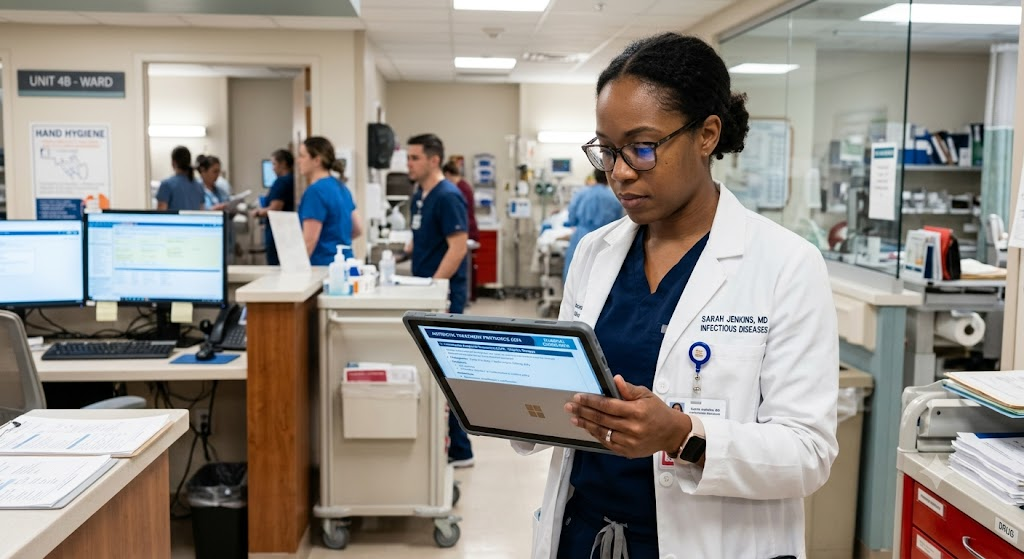
Medical Treatment Overview
Home Comfort and Nutritional Support
While prescriptions do the heavy lifting of clearing infections, healing requires a holistic approach. When your pelvis is inflamed, your entire nervous system goes on high alert. Gentle, evidence-based home measures can significantly turn down the volume of your pain signals.
A heating pad placed across the lower abdomen or a warm, shallow sitz bath can stimulate blood flow to the pelvic region, relaxing hypertonic muscles and easing visceral cramping. Rest is non-negotiable; your body diverts massive amounts of energy toward tissue repair.
What to Eat When Your Appetite Vanishes
Severe pelvic discomfort and heavy antibiotic regimens frequently cause nausea, bloating, and a total loss of appetite. However, skipping meals entirely leaves your immune system without the raw building blocks it needs to repair cellular damage. When solid food feels impossible to swallow, focus on nutrient-dense, easily digestible liquids and soft foods:
- Bone Broths or Clear Vegetable Broths: Exceptionally rich in electrolytes like sodium and potassium, helping prevent dehydration while remaining incredibly gentle on a sensitive stomach.
- Probiotic-Rich Foods: Plain, unsweetened Greek yogurt or kefir. High-dose antibiotics aggressively wipe out your gut’s healthy microbiome; replenishing these beneficial bacteria can stave off antibiotic-associated diarrhea and secondary yeast infections.
- The BRAT Diet Basics: Bananas, white rice, applesauce, and plain toast provide low-fiber, easily absorbed carbohydrates that won’t irritate an inflamed gastrointestinal tract.
Healing and Nutrition

Prevention, Longevity, and Emergency Red Flags
Preventing infectious pelvic health issues centers heavily on rigorous sexual health practices, routine screenings, and barrier methods. Because chlamydia and gonorrhea can be entirely asymptomatic in their early stages, annual screening for all sexually active individuals under 25 (and those older with new or multiple partners) is absolutely paramount. While there is no vaccine for PID itself, staying up to date on the Human Papillomavirus (HPV) vaccine protects against cervical cellular changes that compromise your local immune defenses.
The Long-Term Outlook
When pelvic conditions like PID are caught and treated within the first few days of symptoms, long-term complications are rare. However, if an infection smolders undiagnosed for weeks or months, it can cause irreversible scarring inside the fallopian tubes. This structural damage can lead to Chronic Pelvic Pain, an increased risk of an ectopic pregnancy (a life-threatening condition where an embryo implants outside the uterus), or tubal factor infertility.
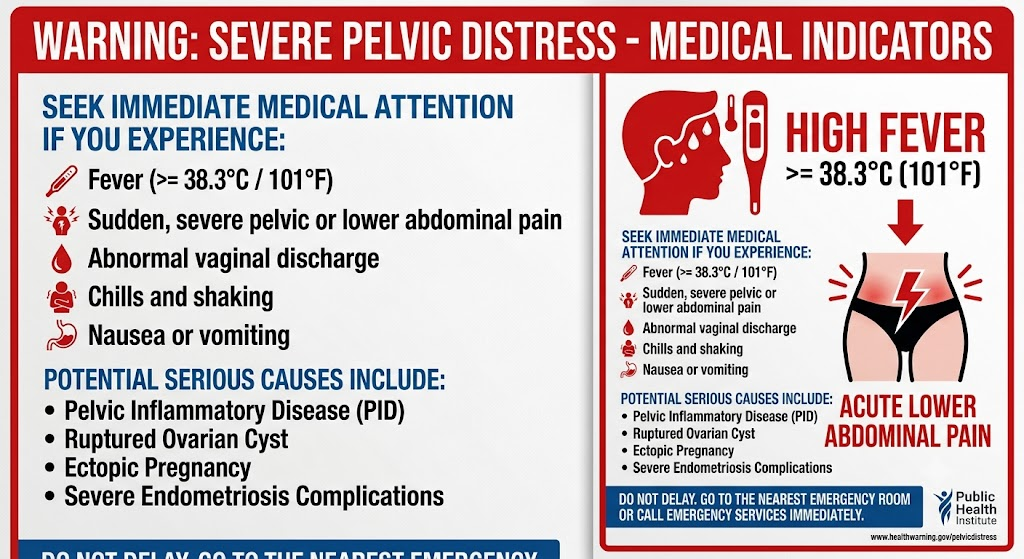
🚨 CRITICAL CDC RED FLAGS: WHEN TO SEEK IMMEDIATE EMERGENCY CARE
If you are experiencing pelvic discomfort and develop any of the following symptoms, do not wait for an outpatient appointment. Go to the nearest emergency department immediately:
- A high fever (temperature greater than 101°F or 38.3°C) accompanied by chills.
- Severe, unbearable, or sudden sharp pain in the lower abdomen that makes walking difficult.
- Inability to keep liquids down due to intractable nausea and vomiting.
- Signs of systemic shock, such as dizziness, lightheadedness, confusion, or fainting.
SEO Focus Keyphrase: pelvic floor dysfunction symptoms SEO Title: Pelvic Health Issues: Signs, Causes & Relief Article Title: Are Pelvic Health Issues Common? A Doctor’s Guide SEO Slug: are-pelvic-health-issues-common Meta Description: Worried about pelvic pain or leaks? A board-certified family physician explains pelvic floor dysfunction, symptoms, and real treatments.
The Secret Shared in Exam Room Three
Sarah sat on the edge of my examination table, her fingers tightly interlaced, her eyes fixed firmly on the floor. She was forty-two, a mother of two, and an avid runner. On paper, she was the picture of vibrant health. But when I asked her what brought her into Austin Family Health Associates today, her voice dropped to a whisper.
“Dr. Ayers, I can’t go for my morning jogs anymore,” she confessed. “Every time I hit the pavement, I leak. And lately, there’s this heavy, dragging sensation down low, like everything is just… falling. Is this just what happens after having kids? Am I broken?”
I pulled my rolling stool closer. The sheer relief on her face when I told her she wasn’t alone—and that she didn’t have to live this way—is exactly why I practice family medicine. Sarah was dealing with pelvic floor dysfunction, specifically stress urinary incontinence and early-stage pelvic organ prolapse. Her story is incredibly common, yet so many women and men suffer in silence out of unearned shame.
What Pelvic Health Issues Actually Feel Like Today
Your pelvic floor is a complex, hammock-like cradle of muscles, ligaments, and connective tissues spanning the base of your pelvis. It supports your bladder, uterus (or prostate), and bowels. When this hammock becomes stretched, weakened, or overly tight, the system begins to fail.
In the early stages, the signs are subtle. You might notice a faint, nagging ache in your lower back or pelvis after standing for long periods. Maybe you find yourself rushing to the bathroom more frequently, or waking up multiple times a night.
As the dysfunction progresses, the symptoms become impossible to ignore:
- A persistent sensation of fullness, heaviness, or pulling in the pelvis.
- Involuntary leaking of urine when you laugh, cough, sneeze, or exercise.
- A feeling like you are sitting on a small ball or that something is physically bulging from your vagina.
- Pain during or after sexual intercourse.
- Difficulty emptying your bladder completely, or having to straining during bowel movements.
Getting to the Bottom of It: The Diagnostic Pathway
Diagnosing pelvic floor issues doesn’t require a crystal ball; it requires a careful, compassionate clinical evaluation. There isn’t a single “pelvic test,” but rather a step-by-step assessment tailored to your body.
The Clinical Exam
First, we sit down and talk. I want to know about your pregnancy history, surgical history, and daily habits. Next, a physical assessment is necessary. For a female patient, this involves a specialized pelvic exam where I ask you to contract and relax your pelvic muscles (like stopping the flow of urine) or to bear down. This allows me to physically grade muscle strength and check for any tissue descent (prolapse).
Targeted Testing
To rule out underlying infections or structural anomalies, we utilize specific diagnostic tools:
- Urinalysis and Urine Culture: To definitively rule out a urinary tract infection (UTI) or interstitial cystitis.
- Urodynamic Testing: If urinary leakage is your primary complaint, this test measures how well your bladder holds and releases urine.
- Pelvic Ultrasound: Transvaginal or transabdominal imaging helps us visualize the pelvic organs to rule out fibroids, ovarian cysts, or uterine thickening.
Evidence-Based Treatments That Work
We do not just tell patients to “do more Kegels.” In fact, if your pelvic muscles are hypertonic (overactive and too tight), doing standard Kegel exercises can actually make your pain worse. Treatment must be precise.
Specialized Physical Therapy
The absolute gold standard first-line treatment is Pelvic Floor Physical Therapy (PFPT). Under the care of a specialized physical therapist, you learn to isolate, strengthen, or relax these deep internal muscles using biofeedback and manual release techniques.
Medical and Pharmacological Interventions
When lifestyle modifications and physical therapy need pharmacological backup, we turn to targeted medications based on your specific subtype of dysfunction:
| Medication Class | Specific Drug Name & Standard Dosage | Clinical Efficacy & Context |
| Anticholinergics | Oxybutynin (Ditropan XL) 5 mg to 10 mg orally once daily | Highly effective for overactive bladder (urge incontinence). Works by relaxing the detrusor muscle of the bladder to reduce spasms. |
| Beta-3 Adrenergic Agonists | Mirabegron (Myrbetriq) 25 mg to 50 mg orally once daily | An alternative for urge incontinence; relaxes the bladder during filling without the dry-mouth side effects common to anticholinergics. |
| Local Estrogen Therapy | Estradiol Vaginal Cream (Estrace) 0.5 mg (0.5 g of cream) applied topically 2–3 times per week | Essential for postmenopausal patients. Reverses vaginal and urethral tissue atrophy, significantly improving tissue elasticity and reducing leaks. |
Finding Comfort at Home
While clinical treatments address the root cause, you need comfort today. There are proven, gentle measures you can take at home to ease the strain on your pelvic floor.
- Paced Diaphragmatic Breathing: When you feel pelvic pain or urgency, sit quietly and breathe deeply into your belly. Let your abdomen expand on the inhale, which naturally drops and relaxes the pelvic floor.
- The Squatty Potty Modification: Use a toilet footstool to elevate your knees above your hips when having a bowel movement. This optimizes the anorectal angle, allowing stool to pass without straining your pelvic muscles.
- Warm Epsom Salt Baths: A warm soak helps relax skeletal muscles, including the external pelvic floor.
What to Eat When Your Appetite Vanishes
Chronic pelvic pain or severe constipation can ruin your appetite. When you don’t feel like eating, focus on small, nutrient-dense, non-irritating foods. Avoid bladder triggers like caffeine, alcohol, artificial sweeteners, and highly acidic citrus fruits. Instead, opt for:
- Bone broths or clear chicken soups (hydrating and easy on the stomach).
- Soluble fiber sources like oatmeal or pureed sweet potatoes to keep stools soft without causing bloating.
- Chia seed puddings or smooth fiber supplements to ensure you do not strain in the bathroom.
Prevention, Long-Term Outlook, and Red Flags
Can you prevent pelvic floor dysfunction? To an extent, yes. Maintaining a healthy weight, managing a chronic cough (which puts massive downward pressure on the pelvis), and learning correct lifting techniques all protect your pelvic hammock. While there is no direct vaccine for pelvic floor breakdown, staying up-to-date on your routine health screenings prevents chronic inflammatory conditions that worsen pelvic health.
The Long-Term Reality
Left completely untreated, severe pelvic floor dysfunction can lead to progressive pelvic organ prolapse—where the bladder or uterus genuinely protrudes outside the vaginal opening—or chronic, debilitating pelvic pain. However, with modern interventions, the long-term prognosis is excellent. Most patients experience significant symptom reversal within 6 to 12 weeks of starting targeted therapy.
⚠️ Emergency Red Flags
While pelvic issues are usually chronic, certain symptoms demand immediate evaluation at the nearest emergency department. Based on CDC and clinical guidelines, seek urgent care if you experience:
- Sudden, acute inability to urinate (acute urinary retention).
- Loss of bowel or bladder control accompanied by numbness in your groin or inner thighs (“saddle anesthesia”).
- Severe, unrelenting pelvic pain accompanied by a high fever, chills, or foul-smelling vaginal or urethral discharge.
Meet Your Medical Team
Author Bio
Dr. Michelle N. Ayers, MD, FAAFP is a board-certified family physician at Austin Family Health Associates in Austin, Texas. She earned her medical degree from the University of Texas Southwestern Medical Center and completed her residency in Family Medicine at the primary clinical affiliates of the UT Austin Dell Medical School. Dr. Ayers is a Fellow of the American Academy of Family Physicians (FAAFP) and specializes in comprehensive women’s health, preventive medicine, and chronic pelvic pain management.
Reviewer Bio
James R. Hartman, MD is a board-certified infectious disease specialist with over fifteen years of clinical experience. He completed his fellowship training in Infectious Diseases at the Baylor College of Medicine and routinely consults on complex pelvic inflammatory diseases, recurrent complicated urinary tract infections, and reproductive tract infections. He reviews clinical content to ensure strict adherence to evidence-based infectious disease and urogenital health guidelines.
References
- Centers for Disease Control and Prevention (CDC). Urinary Incontinence and Pelvic Floor Disorders in American Women. Hyattsville, MD: National Center for Health Statistics.
- National Institutes of Health (NIH) / National Institute of Diabetes and Digestive and Kidney Diseases (NIDDK). Pelvic Floor Dysfunction and Bladder Control Failure: Clinical Trends and Impact.
- American Academy of Family Physicians (AAFP). Diagnosis and Management of Pelvic Organ Prolapse and Urinary Incontinence in Primary Care.
- Infectious Diseases Society of America (IDSA). Clinical Practice Guidelines for the Treatment of Antimicrobial-Resistant Urinary Tract Infections and Associated Pelvic Complications.
- Food and Drug Administration (FDA). Safety Communications regarding Surgical Mesh for Transvaginal Pelvic Organ Prolapse Repair and Pharmacological Updates on Anticholinergic Therapies.